Virginia is for Lovers

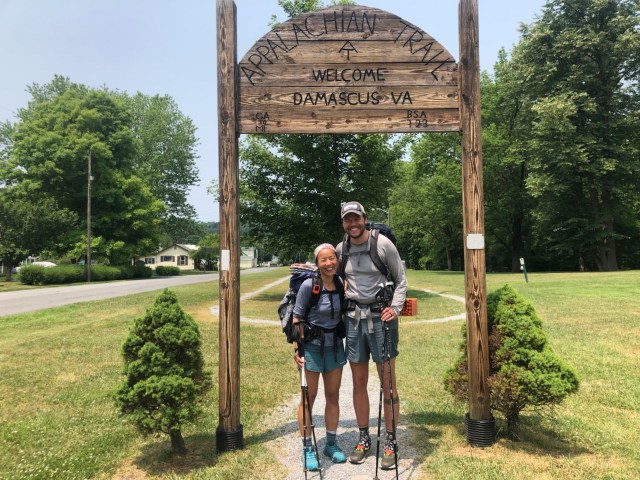
We are in Virginia, which is the largest section of trail in a single state. It includes Damascus (host to Trail Days, a hiker gathering) on the southern end, McAffee Knob, Dragon’s Tooth, and Tinker Cliffs in the middle, and Shenandoah National Park on the northern side. All told, Virginia owns 551 miles of trail, almost 1/4 of the entire journey.

It’s a lot of trail packed into one state. And there is so much to see and appreciate here.

And yet. We have both had days when hiking has lost its sheen. (See also: all the talk about The Virginia Blues.) Thru-hiking is not an activity that involves much moderation. Every day we set out to hike no less than 15 miles, and these days we try to average 18 miles a day. It can be easy to slide into a routine of just pounding out miles and getting lost in the soreness of our feet and the rockiness of the terrain. Personally I’m not living up to my trail name these days because I’m regularly saying to John, “Can we go slower today? I just want to stroll.”

Luckily, the trail and the area surrounding it have many opportunities to slow down.

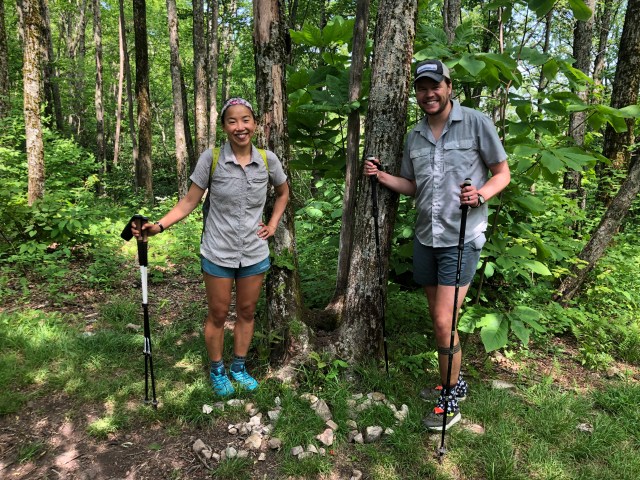
Dragon’s Tooth is a set of jagged rocks that required some climbing, though not so serious that these two amateurs couldn’t make it.

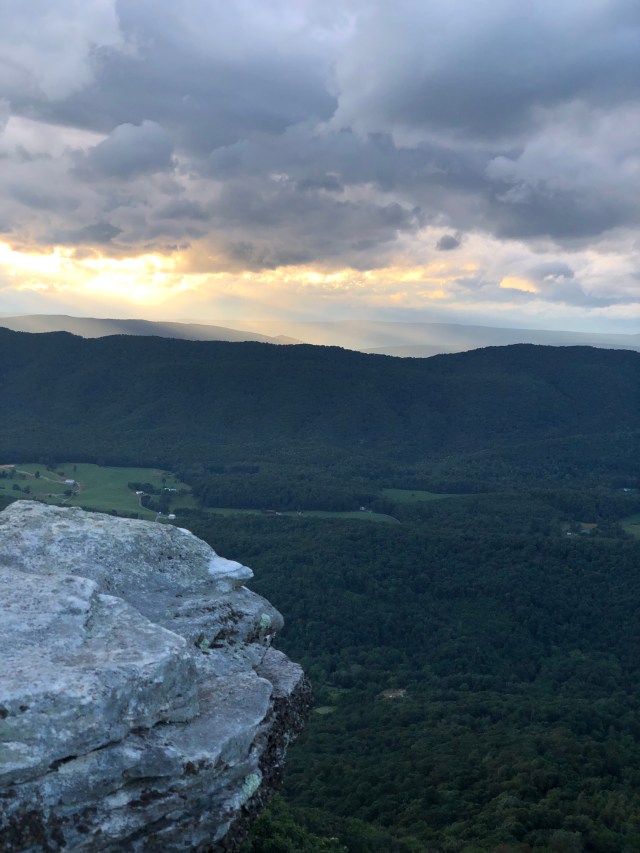
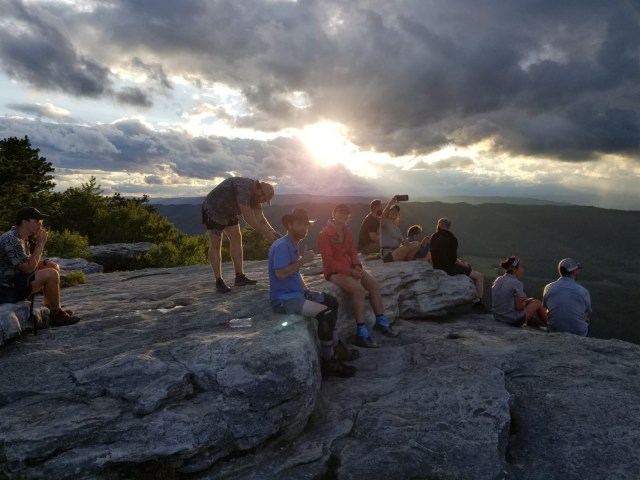
Hiker reunions. The view from McAfee Knob at sunset was a group event. We have been slowly reunited with hikers we met on Day 1 at Springer and in the first weeks of our trip. A large group of us took it slow over this stretch of trail.
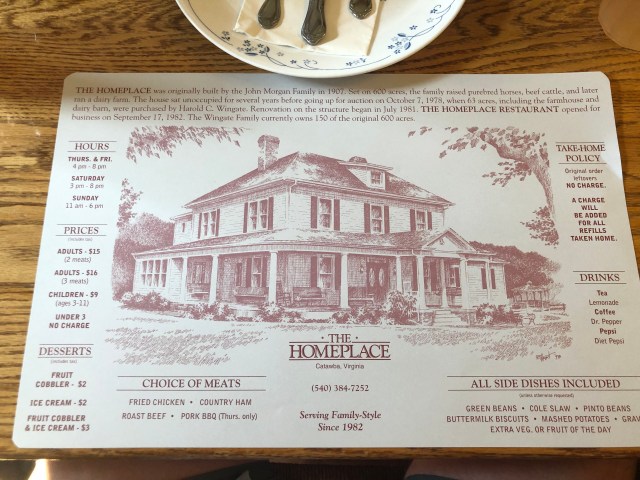
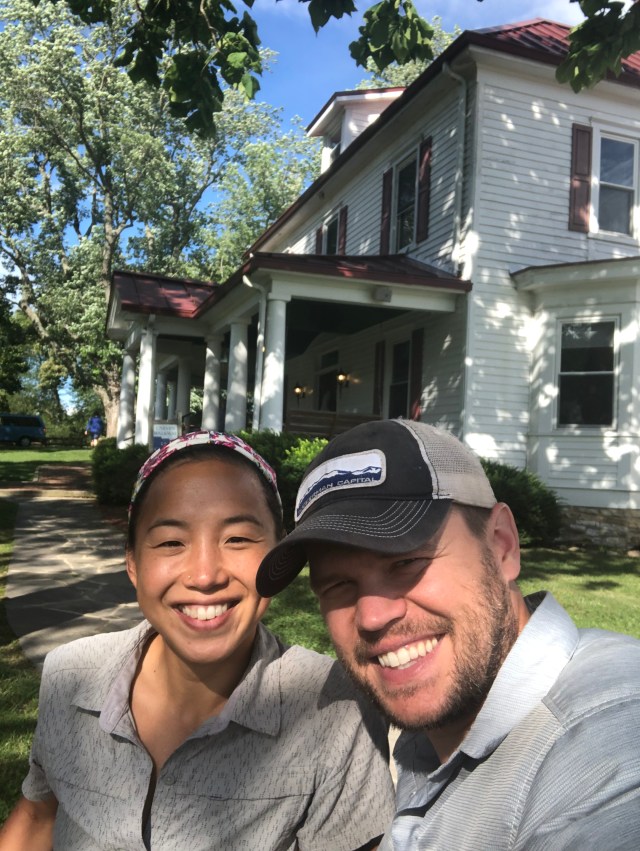
Food. Really good food. Another reason we slowed down as a crew was to go to The Homeplace Restaurant in Catawba, VA. It’s a beautiful spot in an old house with some of the best food we have had just off the trail.

It’s not the easiest to go to. It’s only open Thursday to Sunday from 4-8pm. And apparently we made it three days prior to the start of a ten day vacation for the staff.

But the Homeplace is well worth the effort. For $20, you can have an AYCE (all you can eat), family-style meal with fried chicken, roast beef, slow cooked pork, ham, biscuits, mashed potatoes, gravy, coleslaw, pinto beans, green beans, baked apples, pepper relish, apple butter, cobbler, ice cream, coffee, iced tea, and lemonade. Yum. For those with a calorie deficit, it’s heavenly.
I have no photos of the food because of how completely focused on eating we became once the bowls of steaming biscuits and crispy fried chicken arrived at the table. (Note: this place is not for vegetarians.)

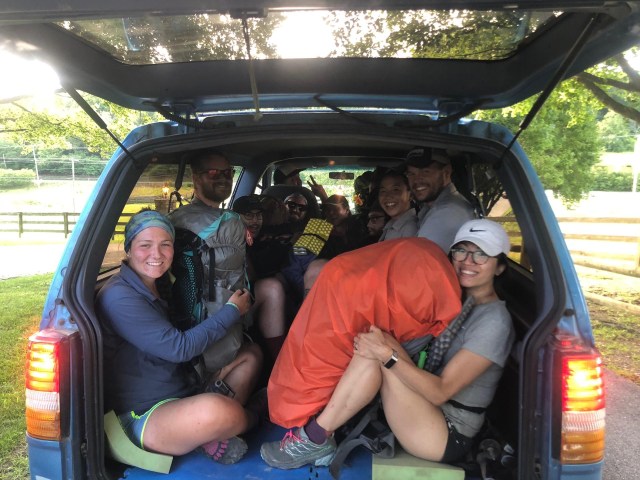
We lounged for awhile before cramming into a van and getting back on trail, our bellies full of the best trail meal in Virginia.
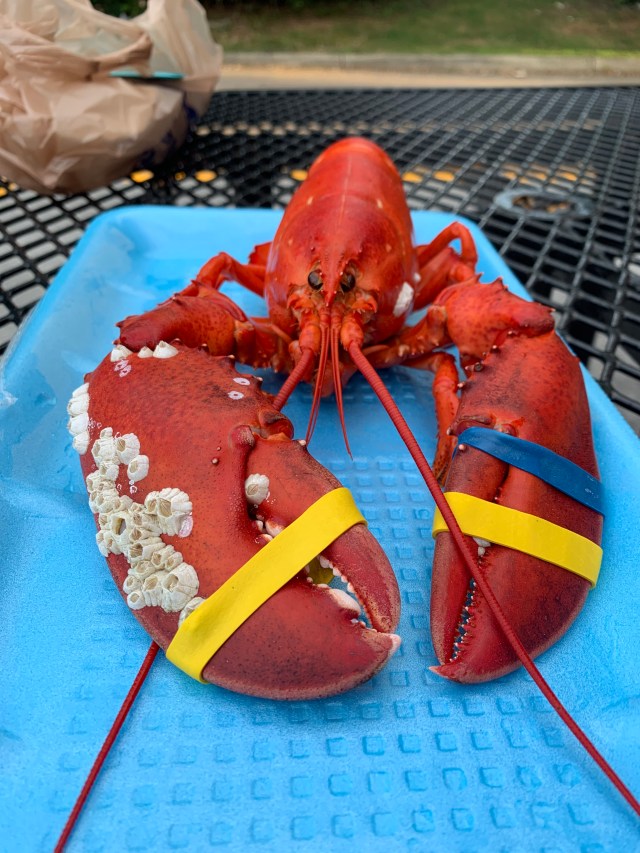
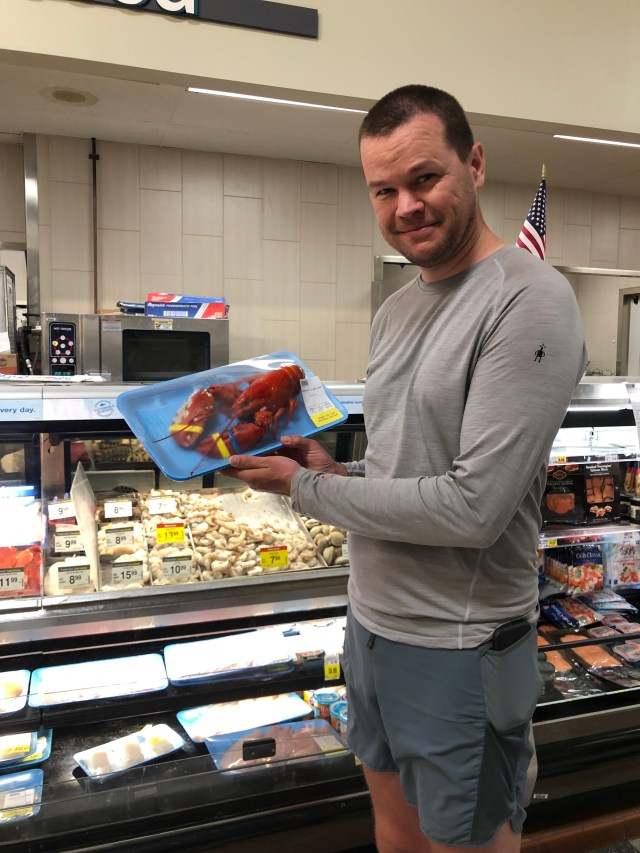
Bring Your Own Lobster. Okay, we know this is pre-emptive and we should really wait for the northeast to get lobster. (Friends who live close to lobstering coasts, look away.) But we’ve been craving fresh, ungarnished food and broke down and had a lobster steamed at a Kroger seafood counter and ate it in the parking lot with a nutcracker we purchased at the store. Super classy. Especially with the barnacles.
Physical setbacks. John sprained his ankle the other day on trail so we hoofed it seven miles to a spot where we could stay off trail for a two days. After ice baths, arnica applications, KT taping, legs up the wall sessions, and one day of slackpacking where John kicked my butt up the hills, I’ve decided it’s time for John to carry a pack again so I can enjoy hiking again.

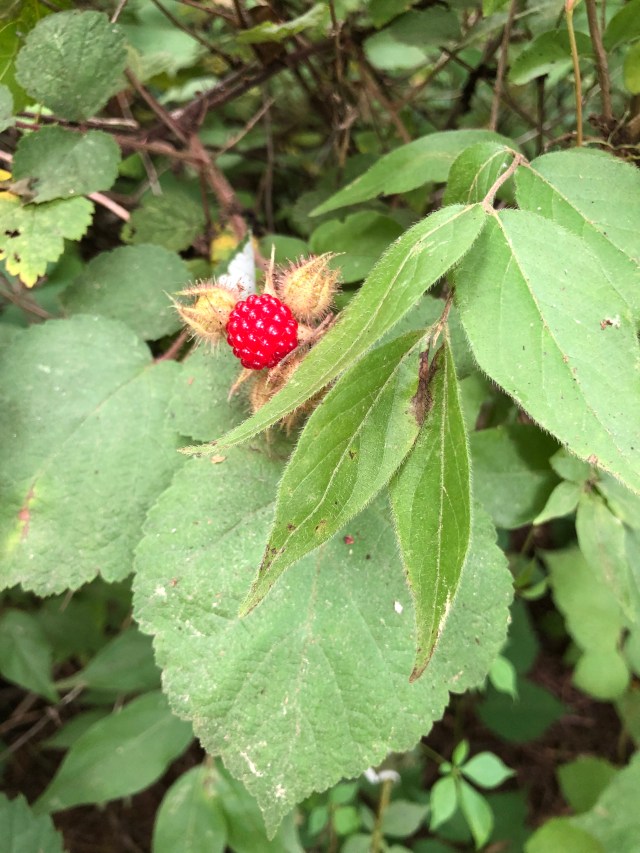
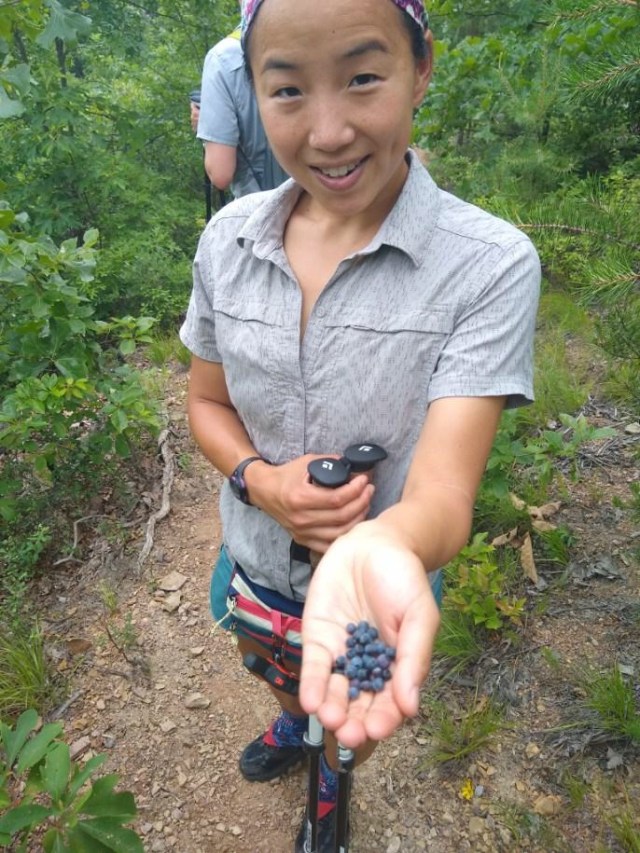
Berries. The berry situation is in full force. Fresh food is hard to come by, except when it’s berry season and the trail is lined with blueberries, raspberries, blackberries, and … wineberries.
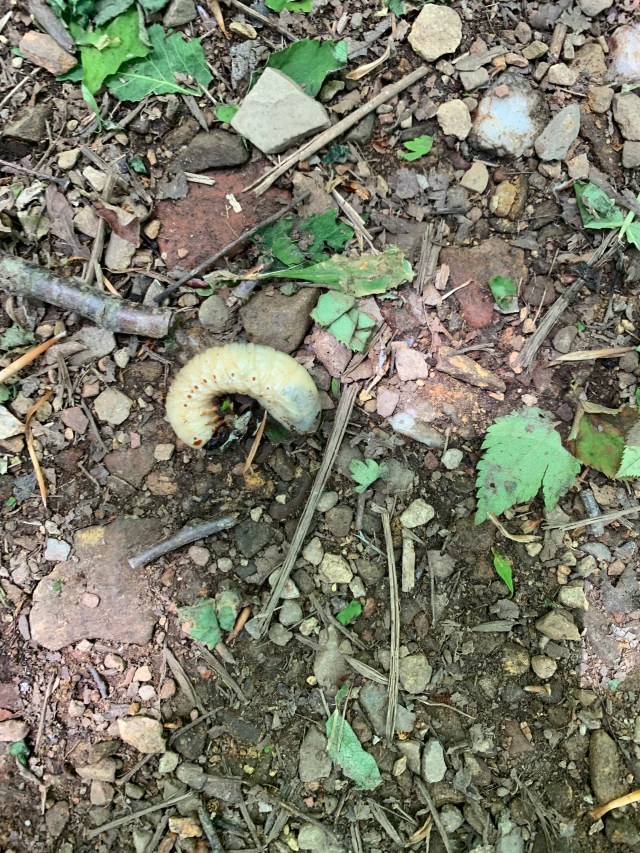
Hikers don’t work nearly as hard as this dung beetle.

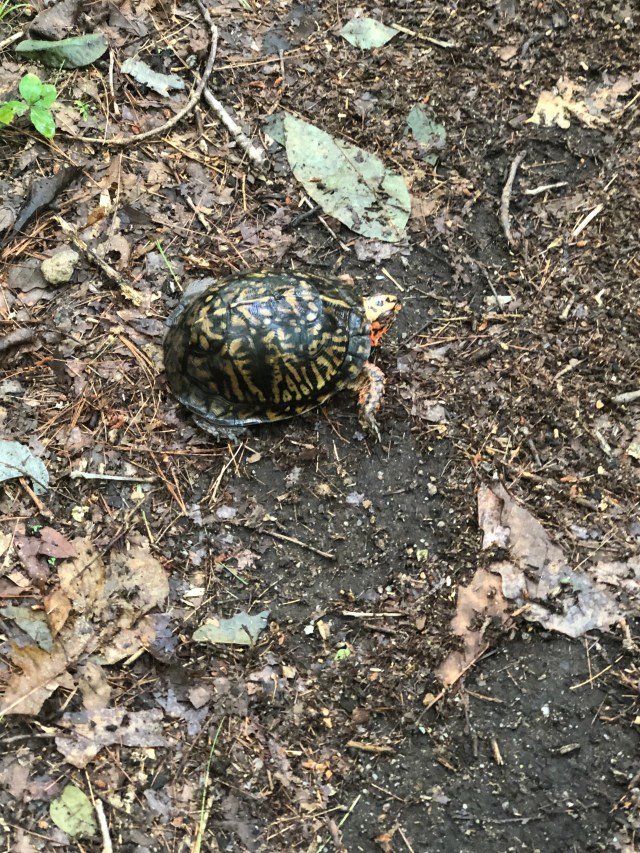
Turtle crossings
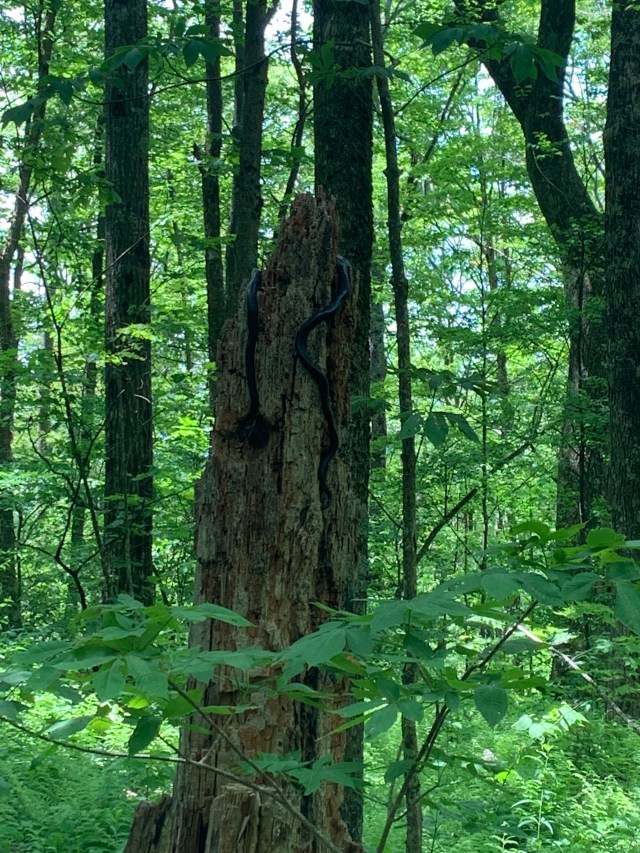
Snakes that won’t get off the trail.

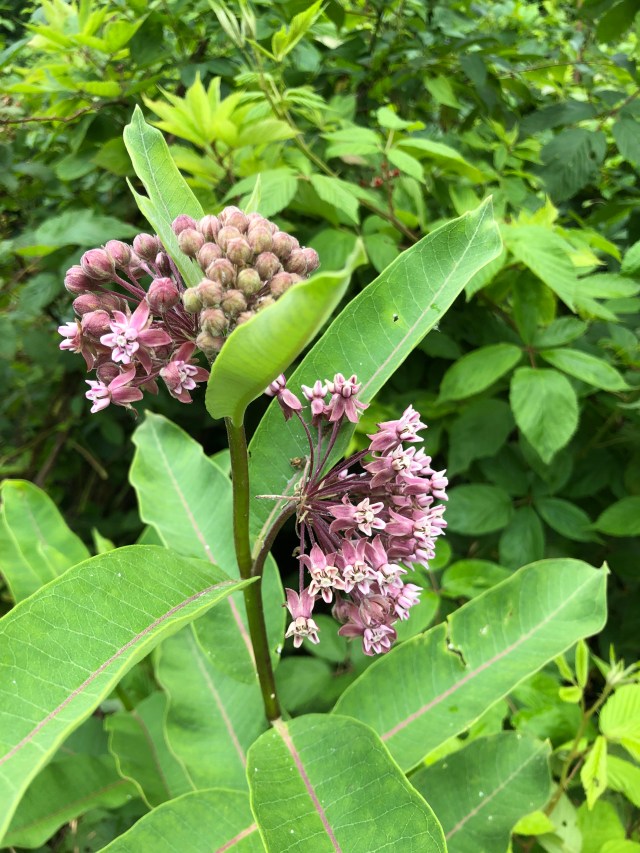
Wildflowers. We started the trail when all of the spring wildflowers were in bloom, and we still try to capture new photos of flowers as we see them. Here are a few of the new ones.

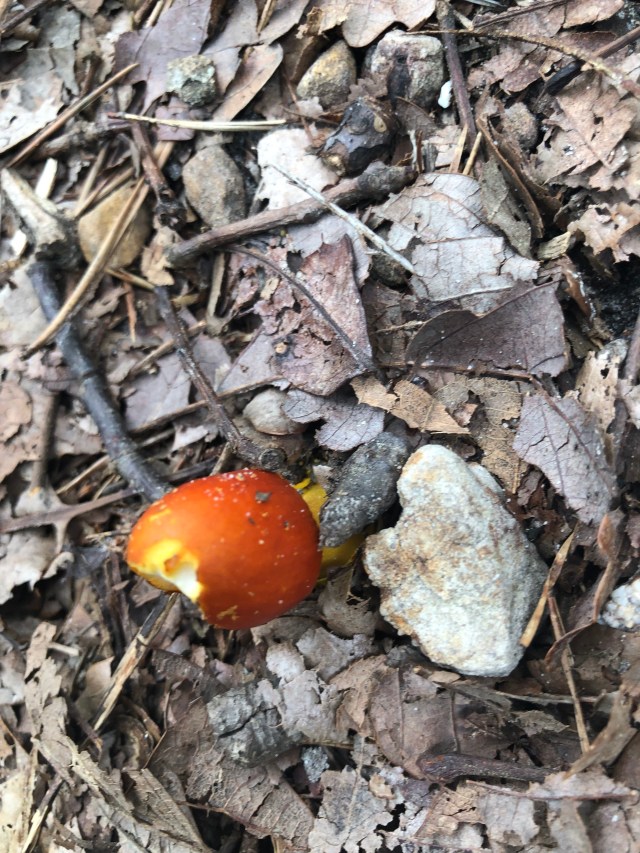
Fungi. Since we received a heavy rain at the start of Virginia, we have seen many varieties of fungus.
Zeros

Most of our time out here is spent climbing and descending the many mountains and hills that make up the Appalachian Trail. But as the trail can be pretty harsh on the body and we have a wedding to prep for, every once in a while we need a day off or a “zero” in trail speak. Typically Jess and I only take zeros every week or two, but what we’re going to do on our next zero is a daily topic for us and the rest of the hikers out here. Remember how excited you were as a kid when summer was approaching? Yeah, that’s how we feel about zeros.

What we do on our zeros:

Eat food

If our ever shrinking waist lines are any indication of our need for calories, getting high calorie meals on a zero is a top priority. On trail I burn 6000+ calories in a day of hiking and Jess isn’t far behind at 4000+. Jess’s favorite zero day food so far is Bo-tatoes (hash browny things) from Bojangles, but other food staples include pizza, sparkling water, and kombucha.

Rest and relaxation

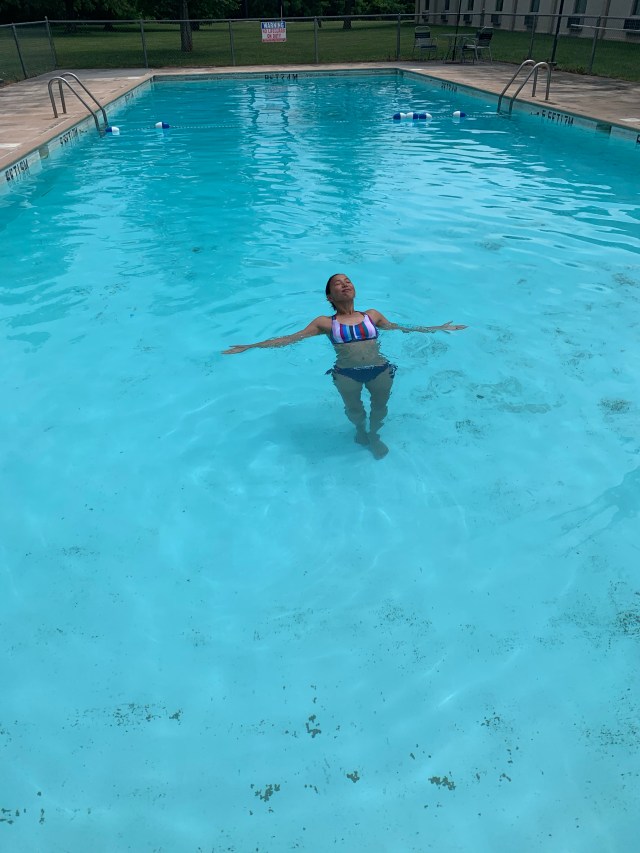
The trail is nice and all, but who doesn’t like a nice bed and a dip in a pool every now and then. Today for instance, we were supposed to start hiking again, but there’s a pool at the hotel we’re staying at and it’s hot outside. Can you say zero?!

Errands

It feels like we spend about two hours at the post office every time we have a day off. The USPS gets us food resupplies, new gear, and our bounce box (a box, almost like a trail closet, that we send from town to town so we don’t have to carry clippers or laundry soap).

Wedding tasks

It turns out that wedding planning takes time and requires the i n t e r n e t these days. Zeros give us a chance to get online so that we can finalize our wedding website (almost done as of today), figure out guest addresses, and make sure we have everything running smoothly so that we’re ready to go at the end of October (yeah, it’s going to be tight, but as they say “Winter is Coming”).

Special Mileage

Not all hikes are created equal. Here is a short list of variations on the traditional backpacking hike.

For some, there is only one way.

Backpack: to lug a pack (usually 15-40 pounds; my pack is between 20-25 depending on food, John’s is 25-30) on your back up and down the trail with food, gear, and supplies so you can tent or stay in a trail shelter. Maybe you make the occasional excursion into a trail town for a shower, food, and a hostel or hotel.

We backpack most of the time. John’s last post shows backpacking in blue and special days in red. Through the first 500 miles, we backpacked 419 miles and filled 81 miles with other “hiking” variations.

For the non-purist, the AT offers a lot of other options. I’m only going to detail the two we’ve used.

Slackpack: to have your pack transported down trail and walk blissfully light and free. Imagine yourself 20-30 pounds lighter. The slackpack is especially useful when injured, recovering from illness, catching up with trail friends, and on rainy days.

Our first foray into slacking was when John was injured out of Nantahala. Then for no good reason but to kick up some higher mileage days out of Hot Springs. (We did our first 20+ day slackpacking.) And then out of Damascus to avoid too many rainy days in a row.

Slackpacking requires some money and coordination, so we try to use it only occasionally. When the mouse at Carter Shelter chewed a hole into our original dry bag, we replaced it with a Sea to Summit daypack that multitasks as one of our food bags. When we slack, we take turns with the pack.

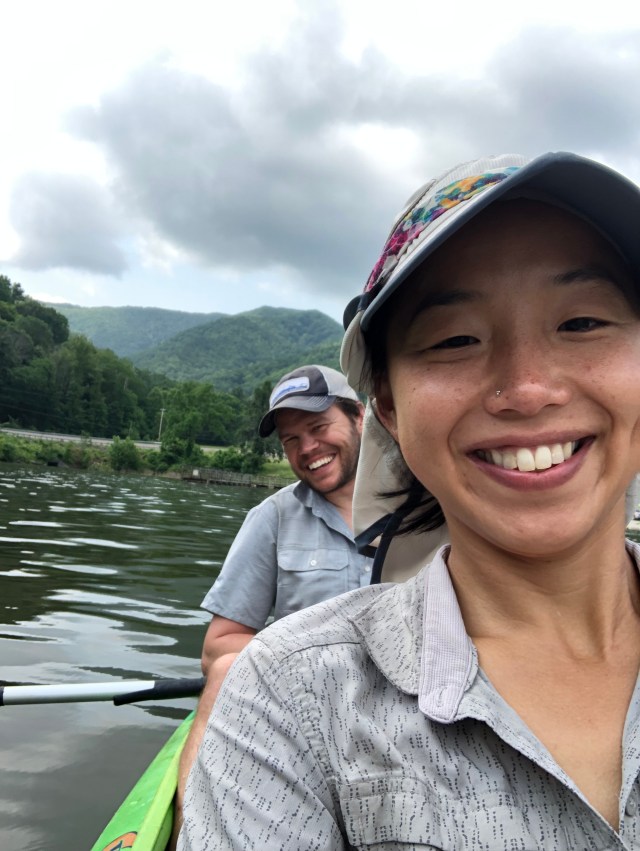
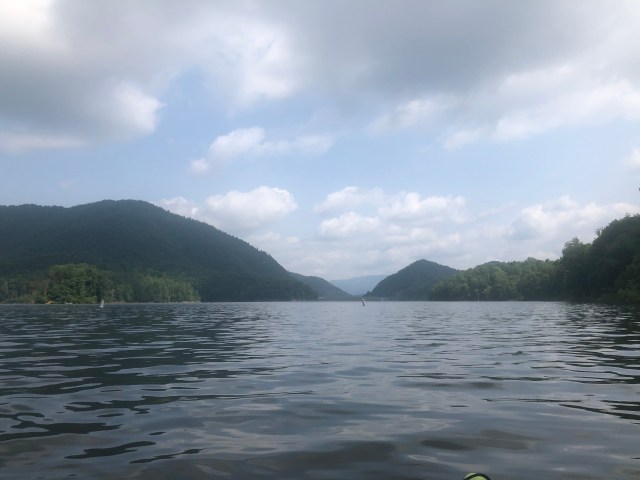
Aquablaze: to use a water source to progress on the trail.

Outside of Hampton, TN, we rented kayaks and paddled across Lake Watauga. Instead of walking around the lake, we paddled 8 miles across the lake bypassing 20 miles on the trail. It gave our legs and feet a much-needed break and tested the strength (weakness?) of our atrophying arms. We swam and floated along in between paddles; it felt like a true summer day on the lake.

This option isn’t available often. There is another spot in the Shenandoah National Park where you can follow the current of the Shenandoah River. It’s a longer stretch (50 miles) and takes 2-3 days. Undecided yet if we will do it!

We are not too proud to say we slackpack or aquablaze. One goal on our trip is to enjoy our days and moments as much as possible. Some days leaving our packs behind has allowed us to achieve just that.

500 Miles

I would walk 500 miles, and I would walk 500 more (and then another 1200 miles) just to be the man (and woman) who walk a thousand (really 2200) miles to fall down at your door. Da da da (da da da) Da da da (da da da) Da da da dun diddle un diddle un diddle uh da

(Flashback to 1988 here)

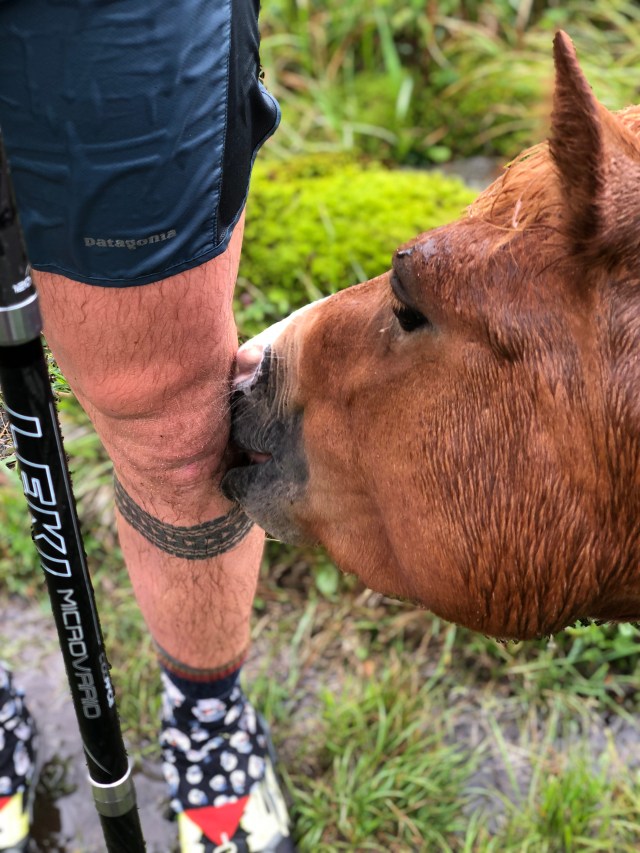
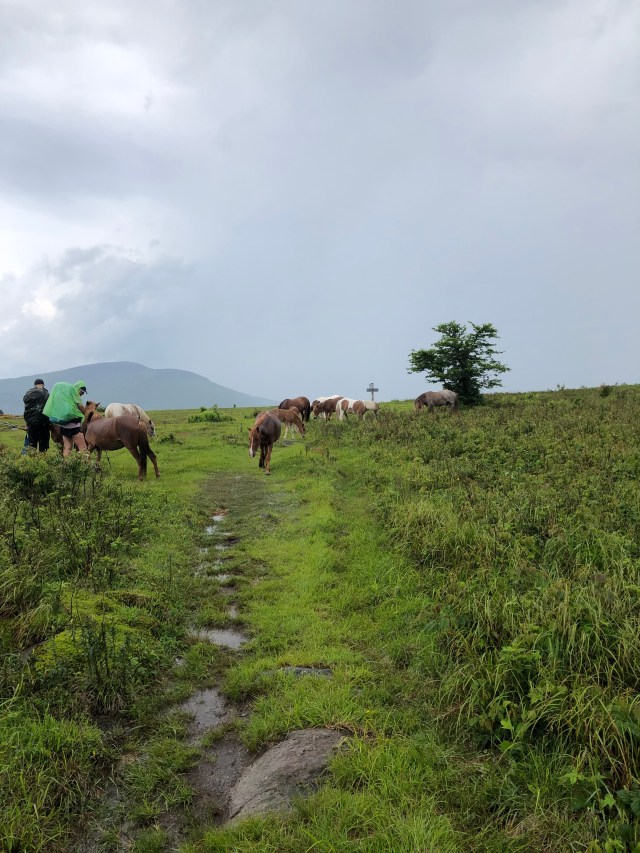
We crossed the 500 mile mark (our 43rd day on the trail) in the Grayson Highlands. The highlands are known for their wild ponies, and today while walking through a downpour we got to meet some ponies.

As a recovering strategist, I can think of no better way to celebrate our first 500 miles than to create a chart… not the best chart I’ve created (bear with me though, I did this on my phone), but what you should be able to see is that we’re speeding up! On average we’ve walked a little under 12 miles per day now, and over the last two weeks we’ve actually been doing just over 16.2 miles per day. Included in these numbers are four zeros (days off) and a few special days (that Jess will explain in a later post). We’re speeding up!!

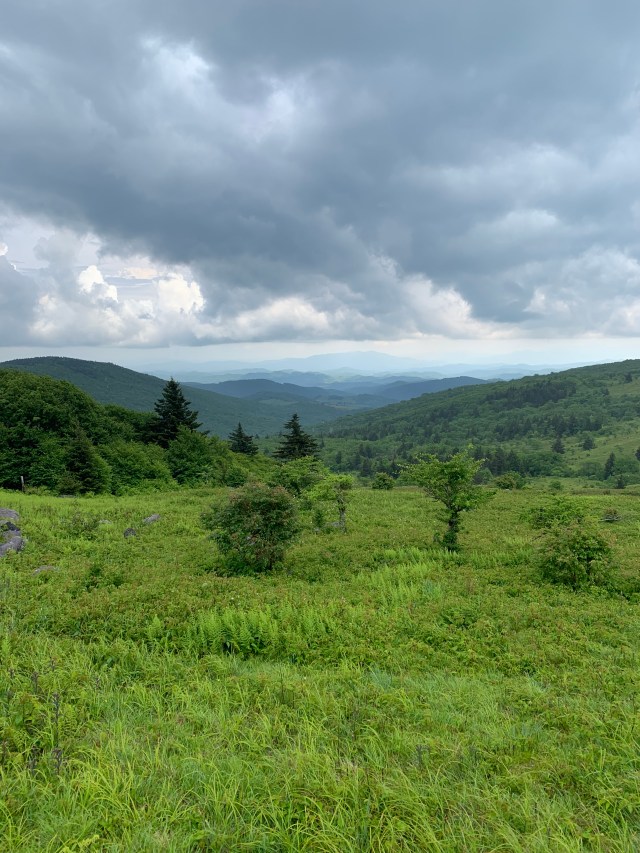
Here are a few glimpses of what I’ve seen recently.

Bye for now